




They Shoot Horses, Don’t They?
Original Novel written by Horace McCoy
Adaptation for Stage written by Ray Herman
Introduction to the work:
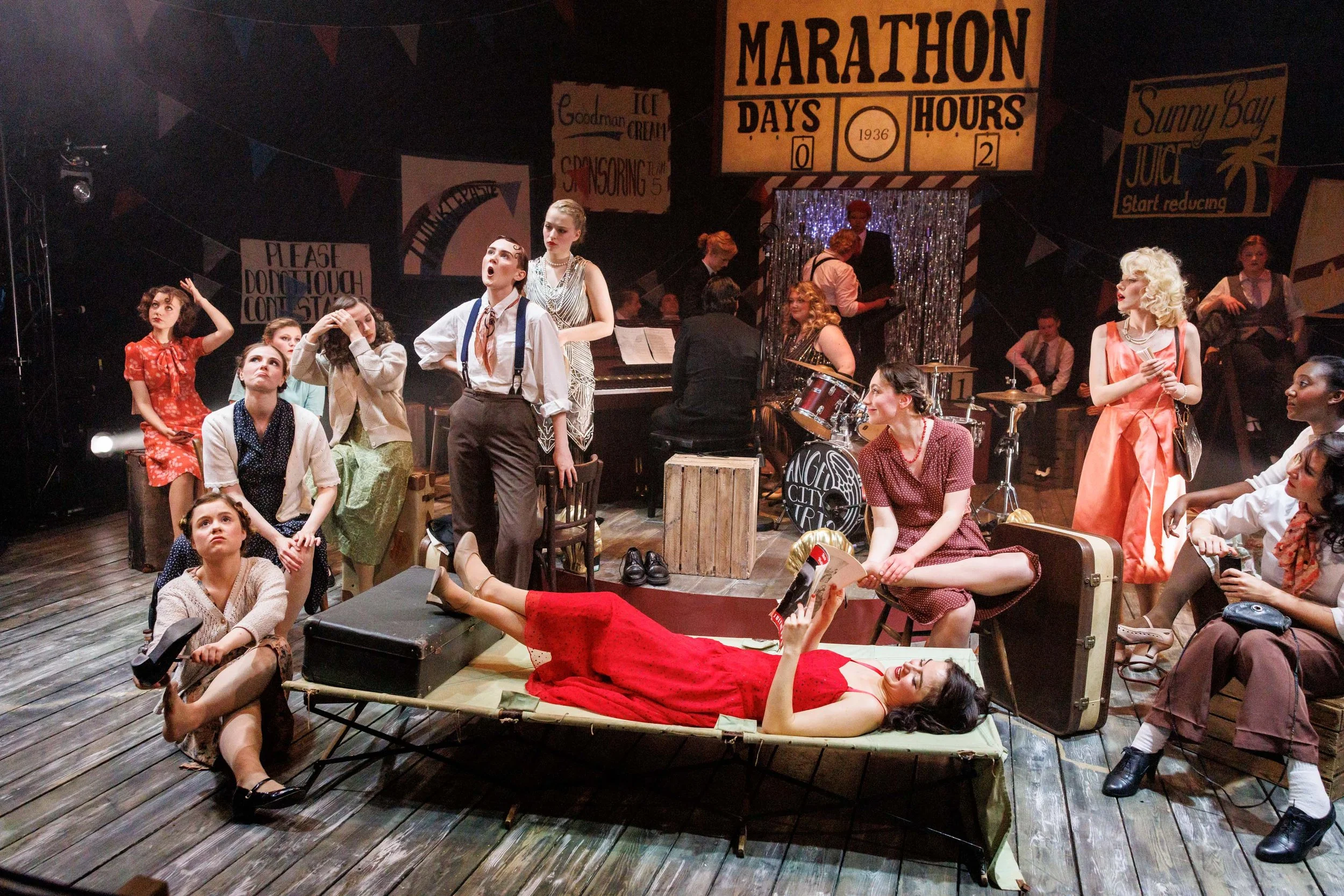
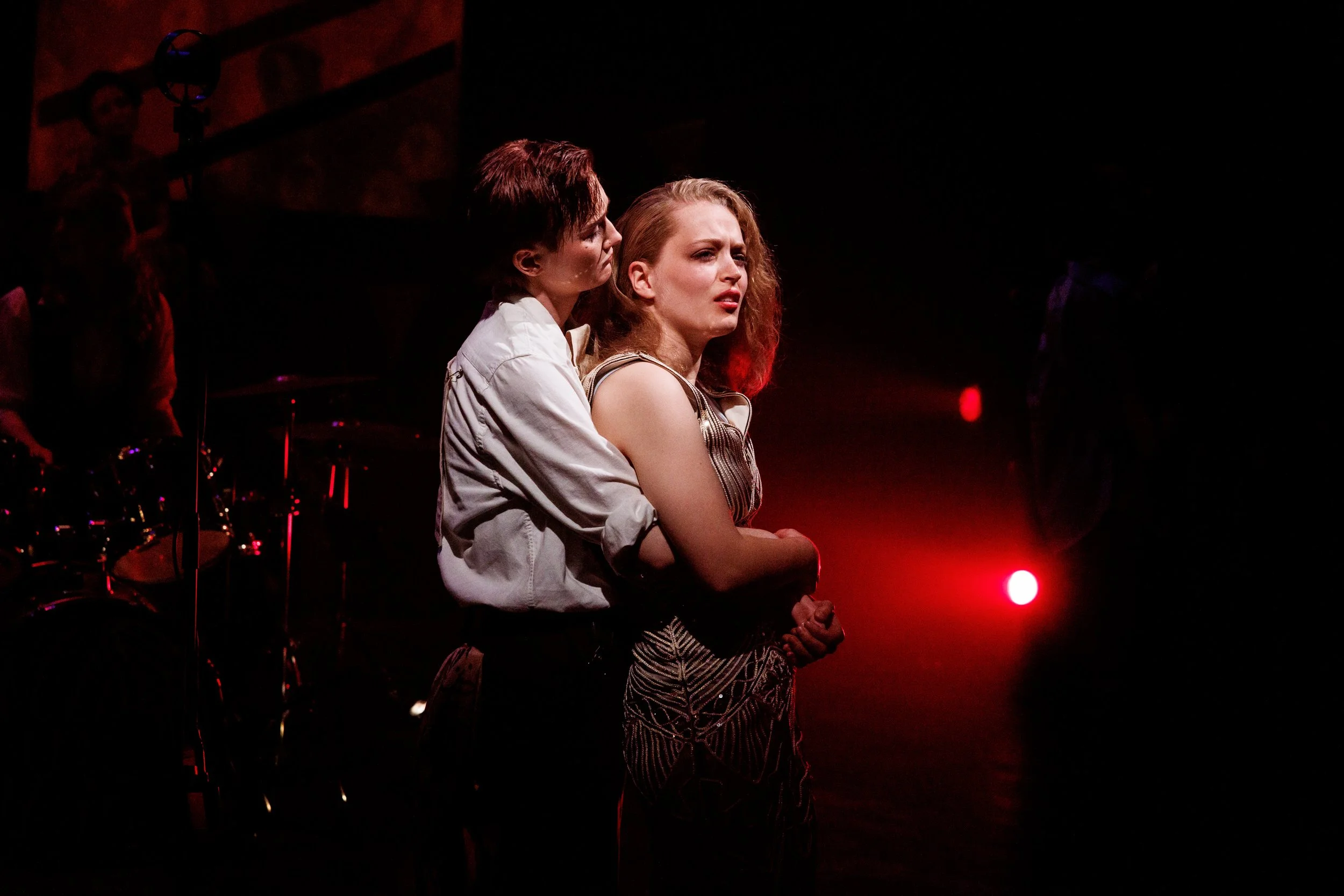
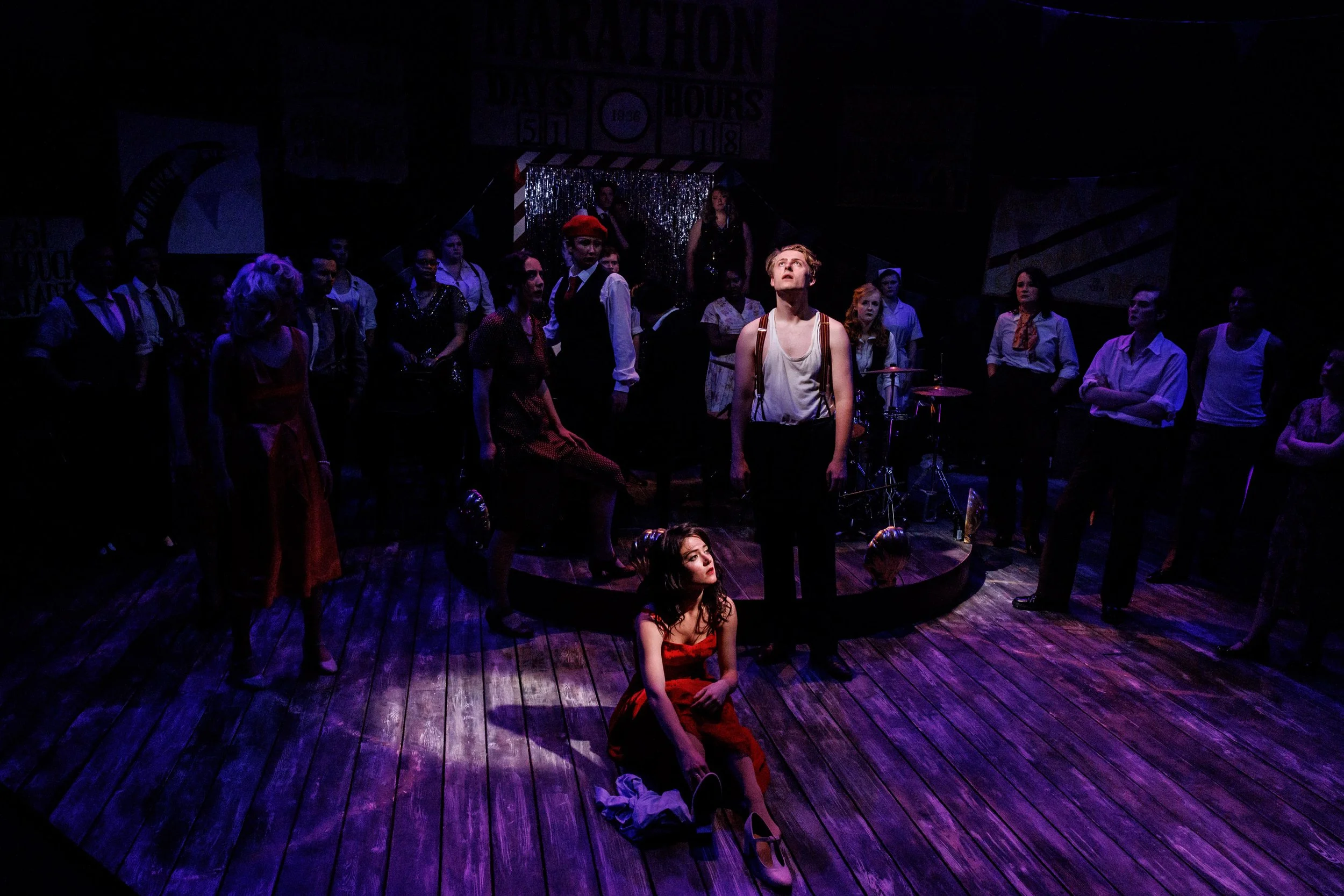
They Shoot Horses, Don’t They? is set during the Great Depression in California, when struggling Americans became increasingly more desperate for money in order to afford basic necessities. Becoming increasingly more desperate, people started turning to schemes, such as dance marathons, for a chance at survival. The play follows Gloria, a cynical young woman exhausted by disappointment who wishes to be a movie star, and Robert, a quiet country-boy drifter who dreams of being a film maker and becomes her dance partner. We also meet many of the other couples and follow their suffering and their stories. As the marathon stretches on for weeks, the contestants are pushed to their physical and emotional breaking points, manipulated by emcees who turn their suffering into spectacle. The dance floor becomes a stark reflection of a society willing to exploit desperation for entertainment. Gloria’s bleak outlook intensifies as she faces the futility of escaping poverty and selfish people, while the marathon’s relentless pace exposes the vulnerabilities and hidden fears of everyone involved. In underlining the thin line between endurance and exploitation, They Shoot Horses, Don’t They? offers a haunting portrait of human desperation and the heavy toll of hope in a time of profound economic despair.
Challenges and Goals:
The overall goal with the progression of lighting throughout the show was to emphasize the intense decline in the mental and physical states of the contestants, specifically that of Gloria. We wanted to start with an over the top, almost cliche, musical environment; bright colors, movement, and fun gobos, which then would become more dramatic realism; less color, harsher shadows, and little to no movement with the lights. Though Act I will steadily get less colorful and more realistic, transition between Act I and Act II would be the true indicator of this progression. I personally found this very fun because my natural inclination when I first started designing lights as a teenager was to go for dramatic realism and, to some degree, the classic musical style is the opposite of that. Working out how to move from the bright, fun, fantastical styles of musicals to intense and heavy dramatic realism in a way that didn’t feel like we were disrupting the world we had built throughout this show was a lot of fun and I’m very proud with how this progression turned out!
Credits
The Rose Theatre, Rose Bruford Performing Arts School
Director: Steven Dykes
Score Arrangement and Music Director: Callum Patrick Hughes
Production Stage Manager: Emma Taylor
Set and Costume Designer: Sorcha Corcoran
Lighting Designer: AK Cox
Sound Designer: Dom Wilson
Photographer: Ben Wilkin